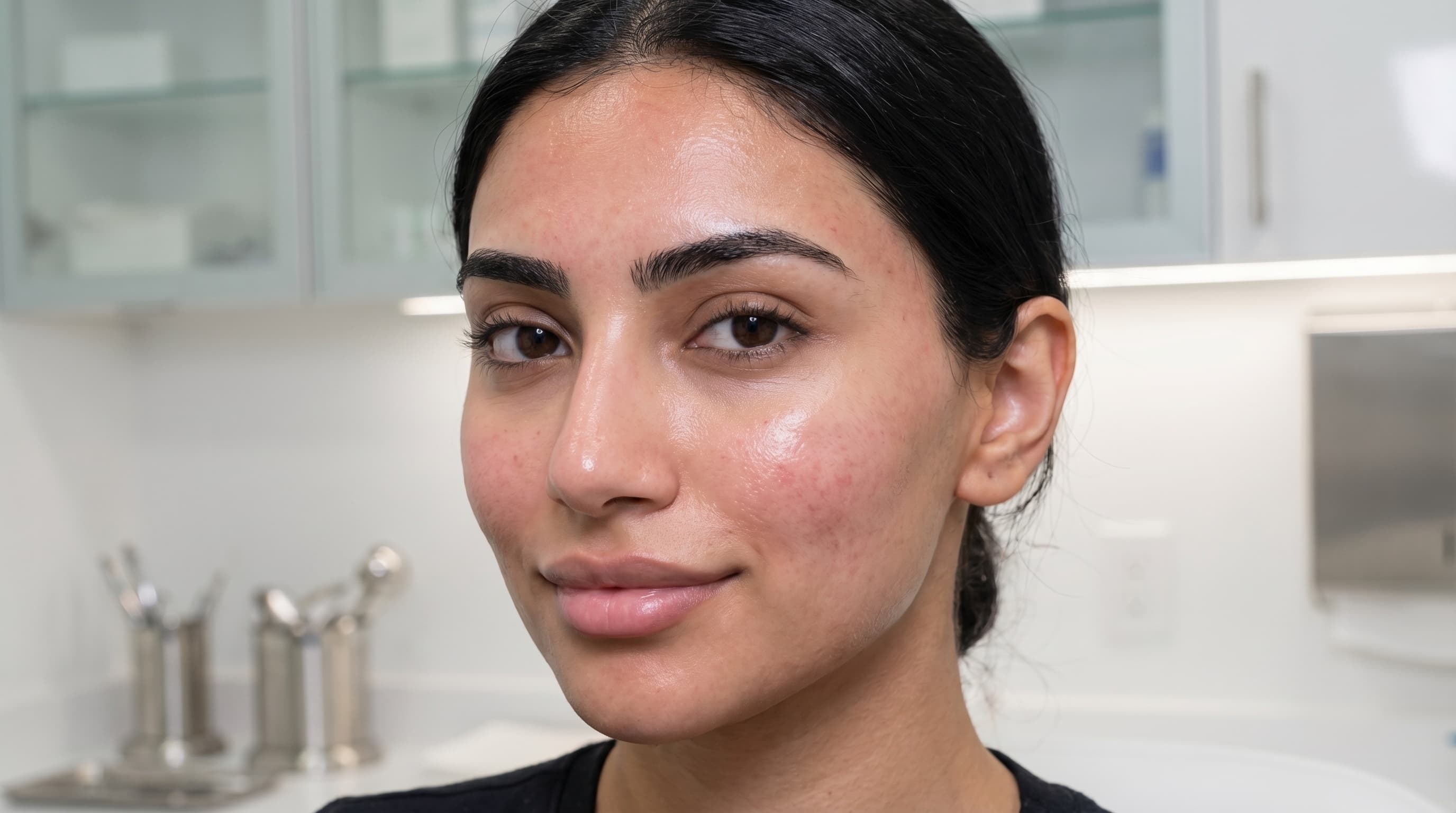
Micro-Needling in Manchester
Controlled micro-injury that triggers collagen and elastin remodelling, refining pores, scarring, and overall skin texture.
All treatments at Revitalised Aesthetics are carried out by Le Xu, a Registered Nurse and Independent Nurse Prescriber. Every booking begins with a 45-minute consultation to assess suitability, discuss contraindications, and obtain informed consent. Outcomes vary; no results are guaranteed.
A 45-minute private consultation precedes every booking. We assess suitability, map the face, and agree a written plan before any treatment is confirmed.
Most clients return to normal activity the same day. Any localised swelling or redness typically settles within 24–72 hours.
A review is offered at the clinically appropriate interval for each protocol, with photographs taken under standardised lighting to document progress.
What clients typically ask.
Answers below are summaries of widely accepted clinical practice. Your specific plan is always confirmed in consultation.
How does micro-needling work?
A sterile device creates controlled micro-channels through the upper layers of the skin. The wound-healing response that follows activates fibroblasts to produce new collagen and elastin, a process known as collagen induction therapy, first described in the peer-reviewed literature in the 1990s.
What does it treat?
There is published evidence supporting micro-needling for atrophic acne scarring, fine lines, enlarged pores, uneven skin texture, and some forms of hyperpigmentation. It is not a primary treatment for active inflammatory acne or for deep, bound-down scars, which require different modalities.
Does it hurt?
A topical anaesthetic is applied for 20 to 30 minutes before the procedure, which keeps discomfort to a mild prickling or pressure sensation. The face typically feels warm and tight afterwards, similar to mild sunburn.
What is the downtime?
Expect redness resembling moderate sunburn for 24 to 48 hours, with possible pinpoint bruising or dryness over the following 2 to 3 days. Strict SPF 50 use is essential for at least 2 weeks as treated skin is more photosensitive.
Who is not a candidate?
Micro-needling is not appropriate over active acne, cold sores, skin infections, open wounds, keloid-prone skin, or recent isotretinoin use (commonly a 6-month gap is advised). It is also avoided during pregnancy and in clients with bleeding disorders.
Other protocols at the studio
A specialist massage technique that stimulates lymph flow to reduce puffiness, accelerate recovery, and visibly de-puff the face and body.
Read more →Hyaluronic acid placed with anatomical precision to restore volume, balance features, and soften the effects of time on the face.
Read more →Targeted aqualyx-based injections that dissolve stubborn pockets of localised fat, contour work without surgical intervention.
Read more →Radiofrequency and ultrasound delivered through BTL Exilis to tighten lax skin, redefine the jawline, and restore lower-face contour.
Read more →