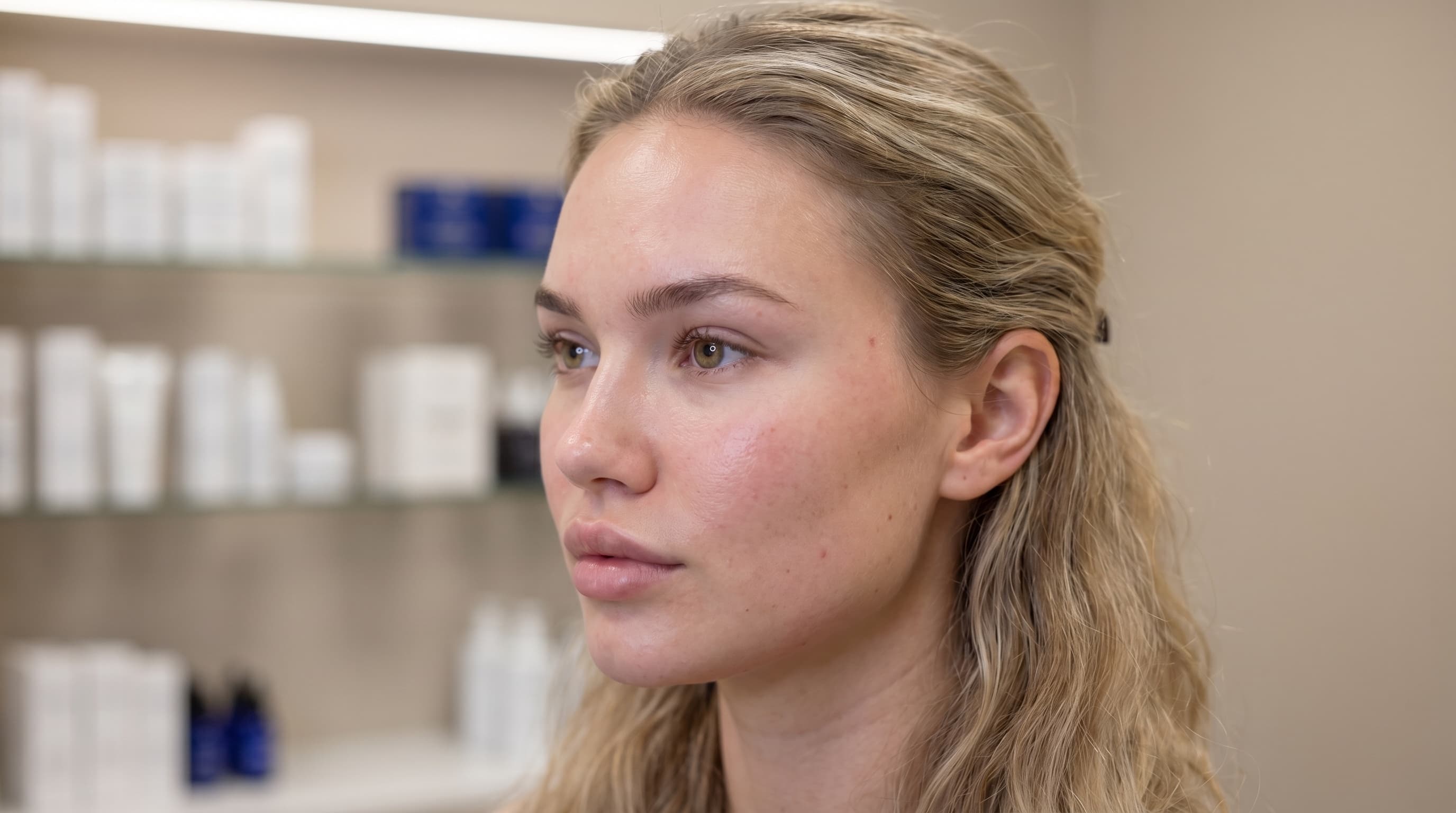
Dermal Fillers in Manchester
Hyaluronic acid placed with anatomical precision to restore volume, balance features, and soften the effects of time on the face.
All treatments at Revitalised Aesthetics are carried out by Le Xu, a Registered Nurse and Independent Nurse Prescriber. Every booking begins with a 45-minute consultation to assess suitability, discuss contraindications, and obtain informed consent. Outcomes vary; no results are guaranteed.
A 45-minute private consultation precedes every booking. We assess suitability, map the face, and agree a written plan before any treatment is confirmed.
Most clients return to normal activity the same day. Any localised swelling or redness typically settles within 24–72 hours.
A review is offered at the clinically appropriate interval for each protocol, with photographs taken under standardised lighting to document progress.
What clients typically ask.
Answers below are summaries of widely accepted clinical practice. Your specific plan is always confirmed in consultation.
What are dermal fillers made of?
The fillers used at the studio are cross-linked hyaluronic acid (HA) gels. Hyaluronic acid is a naturally occurring sugar molecule already present in the skin, joints, and connective tissue. Modern HA fillers are CE-marked medical devices produced under pharmaceutical manufacturing standards.
How long do they last?
Duration depends on the product, the area treated, and individual metabolism. Published data suggest most HA fillers last between 6 and 18 months; denser structural products placed in deep tissue planes tend to last longer than softer products placed superficially.
Is it painful?
Discomfort is usually minor. Most HA fillers contain lidocaine, a local anaesthetic, and topical anaesthetic cream is applied before treatment. The lip and nasolabial regions are more sensitive than the cheek or jaw.
What are the risks?
Common, short-lived effects include swelling, bruising, tenderness, and asymmetry in the first 1–2 weeks. Less common risks include nodules, infection, and hypersensitivity. Vascular occlusion, filler entering or compressing a blood vessel, is a rare but serious complication. The hyaluronidase enzyme, which can dissolve HA filler, is kept on site for emergency reversal.
Can filler be reversed?
Yes. Hyaluronic acid filler can be dissolved with the enzyme hyaluronidase, usually within 24–48 hours of administration. This is one of the main safety advantages of HA filler over permanent or semi-permanent alternatives.
Other protocols at the studio
A specialist massage technique that stimulates lymph flow to reduce puffiness, accelerate recovery, and visibly de-puff the face and body.
Read more →Targeted aqualyx-based injections that dissolve stubborn pockets of localised fat, contour work without surgical intervention.
Read more →Radiofrequency and ultrasound delivered through BTL Exilis to tighten lax skin, redefine the jawline, and restore lower-face contour.
Read more →Controlled micro-injury that triggers collagen and elastin remodelling, refining pores, scarring, and overall skin texture.
Read more →